Power Monitoring and Comparison of ESP32 and nRF52 Device
Comprehensive analysis of power consumption patterns in embedded systems with LED operation
Back to Home🎯 Project Goals
- Learn about and use the power saving features in ESP32 and nRF
- Demonstrate the features in an LED lighting and user data input application
- Compare the results of the two platforms
🔧 Components Needed
- ESP32 (ready to go)
- nRF52832 (or another nRF device)
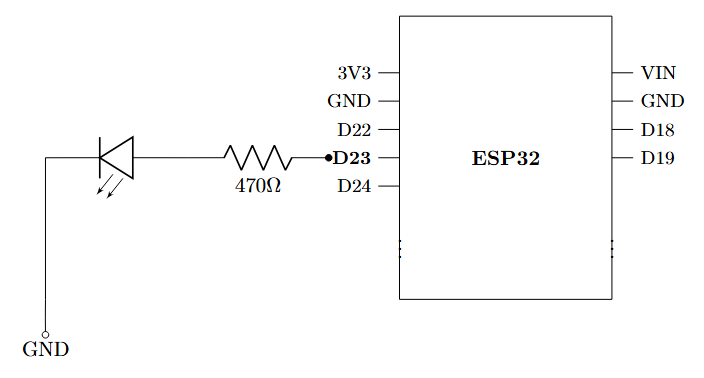
- LED with 470 ohm resistor (3.3V/470Ω ≈ 7 mA)
- External USB Connector to measure current (DROK USB Tester)
💻 Software Requirements
- PlatformIO environment for ESP32
- VS Code and Zephyr for nRF Device
- Hardware access in both platforms for current measurement
ESP32 Circuit Design
LED Operation Analysis
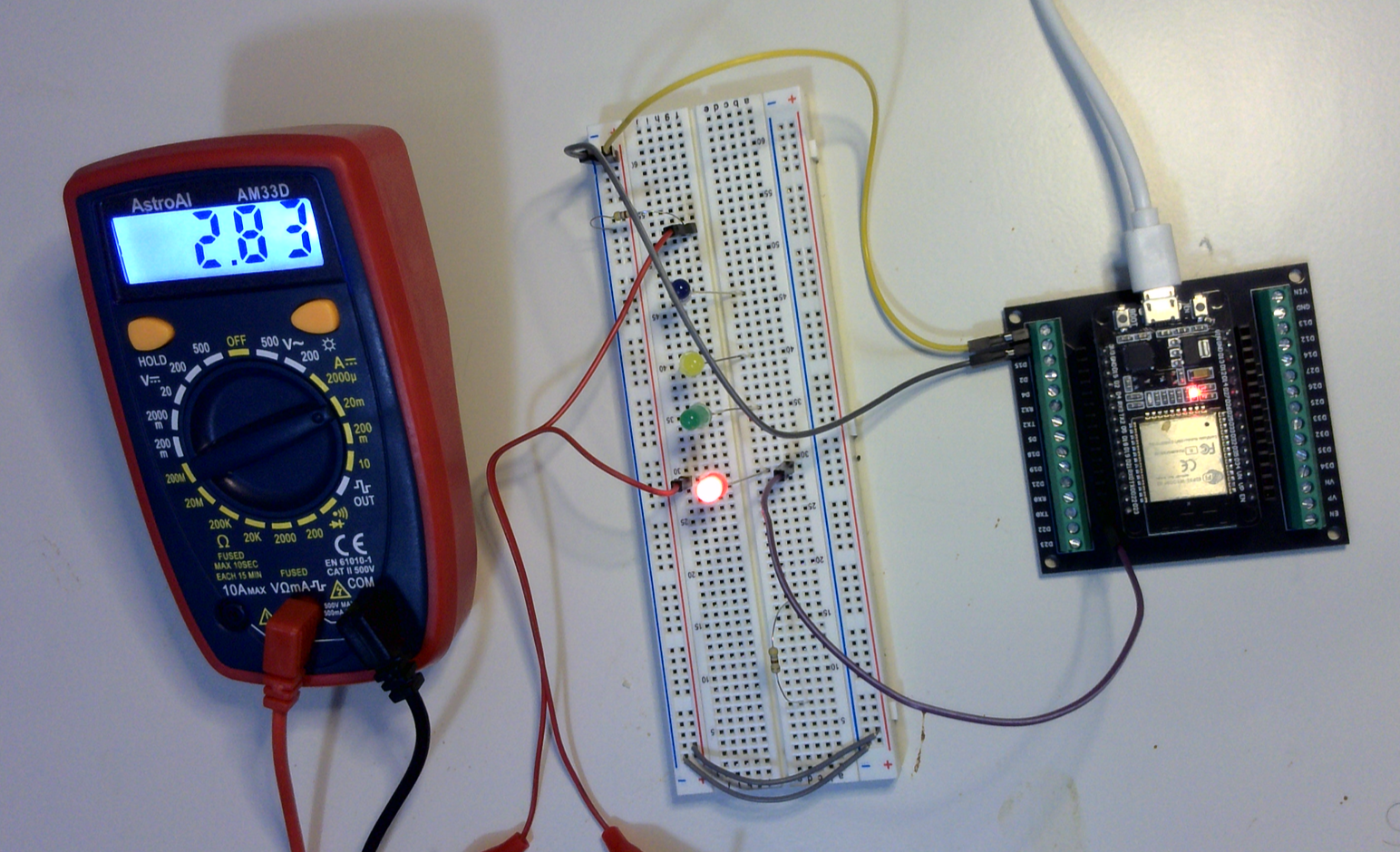
⚡ Always ON Mode
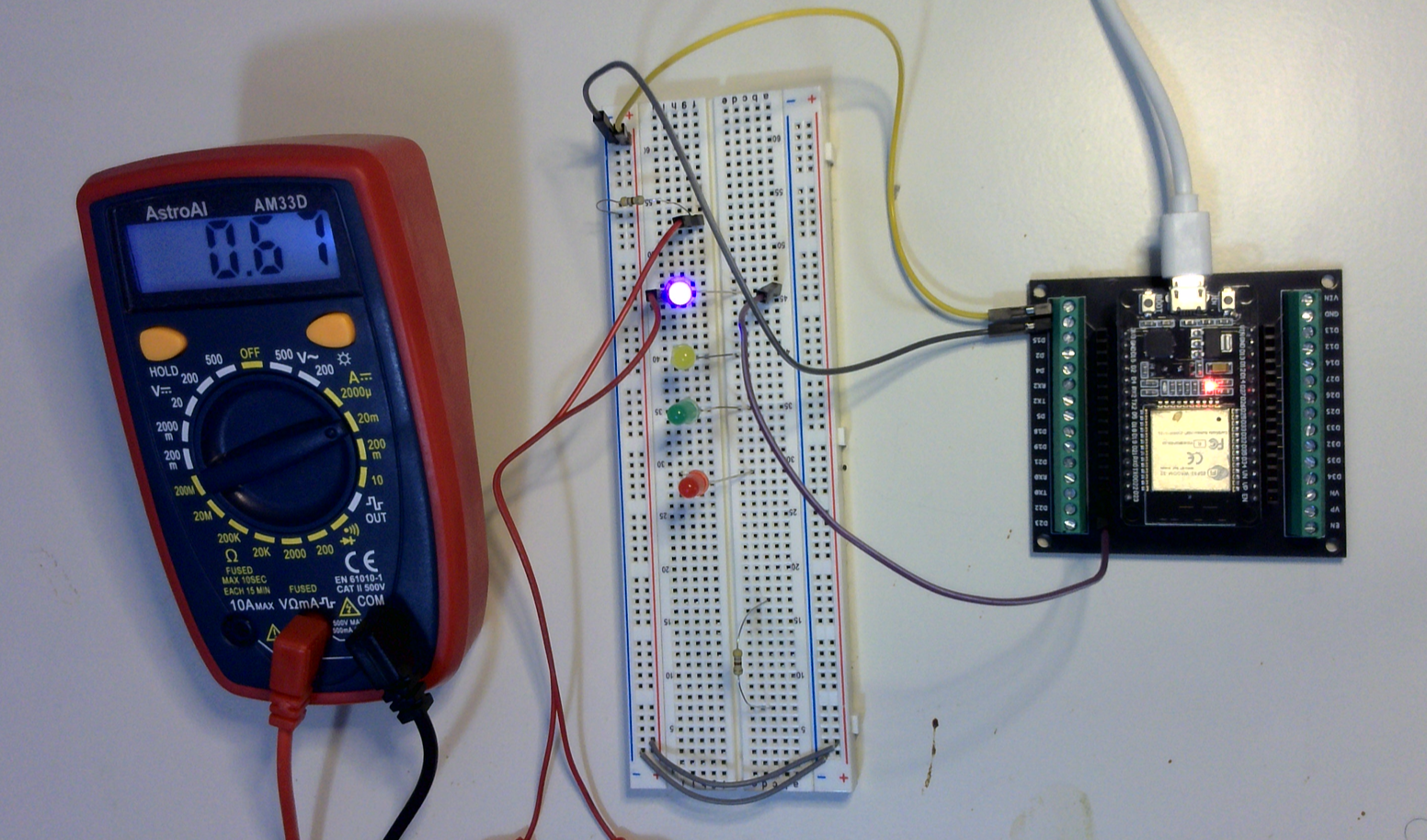
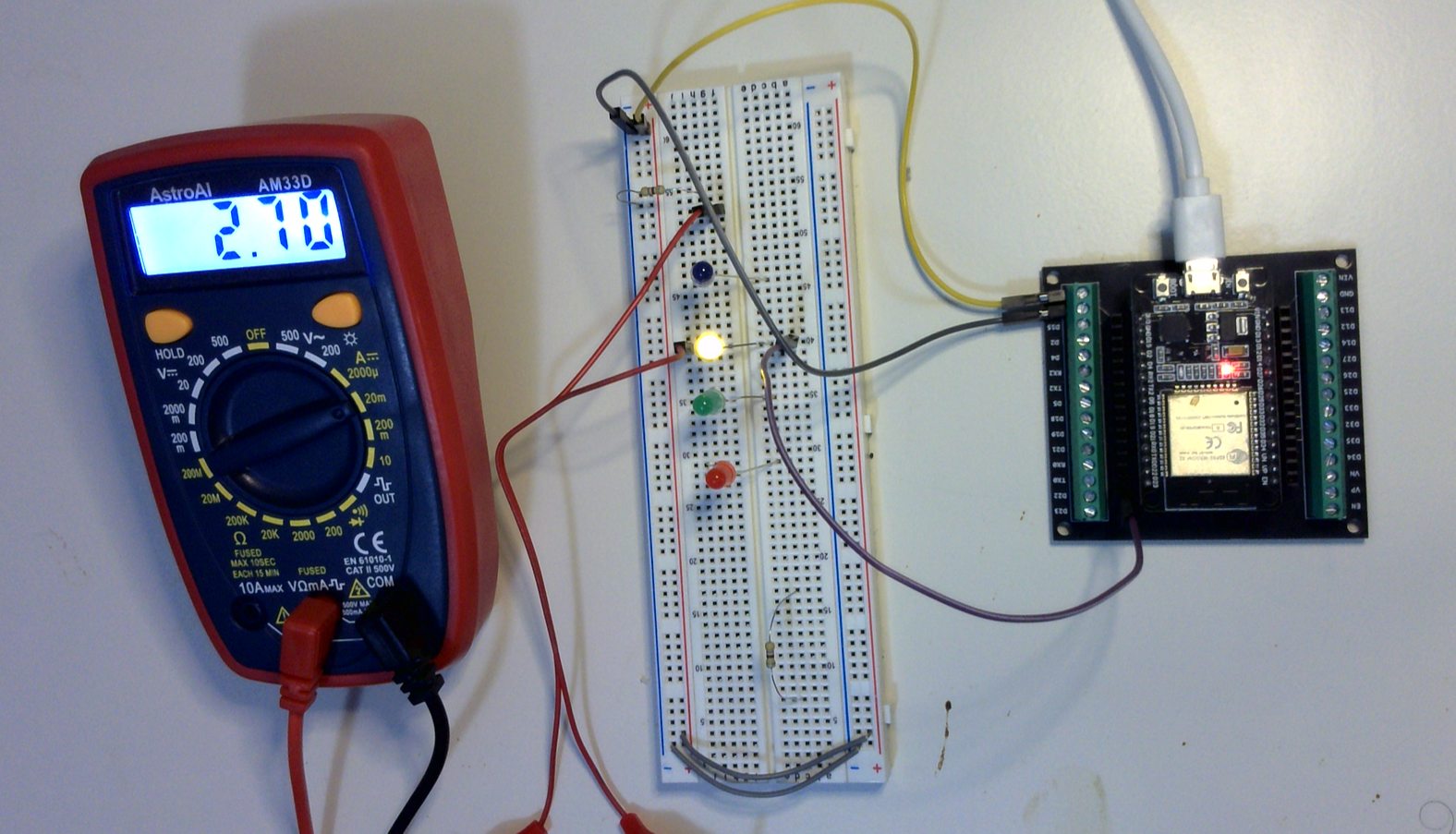
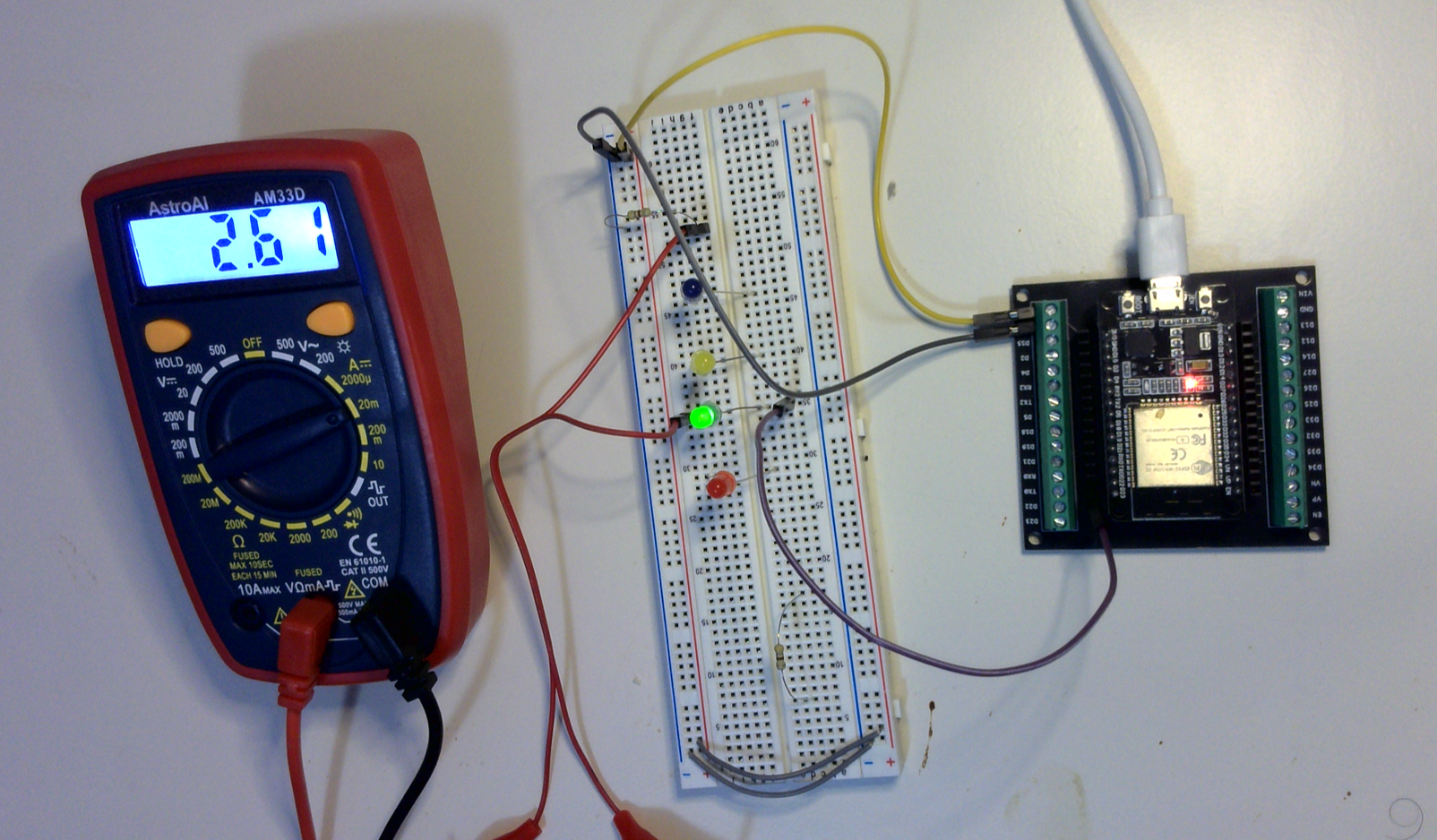
Direct current measurements with different LED colors at constant illumination.
Violet LED
Yellow LED
Green LED
Red LED
\(V_f = V_{in} - I \times 470\)
| LED Color | Applied Voltage (V) | Current Recorded (mA) | Forward Voltage (V) |
|---|---|---|---|
| Violet | 3.3 | 0.67 | 2.98 |
| Yellow | 3.3 | 2.7 | 2.03 |
| Green | 3.3 | 2.61 | 2.07 |
| Red | 3.3 | 2.83 | 1.97 |
The violet LED shows significantly lower current consumption (0.67 mA) compared to other colors, indicating a higher forward voltage drop characteristic of blue/violet LEDs.
🔄 Blinking Pattern (30 Hz)
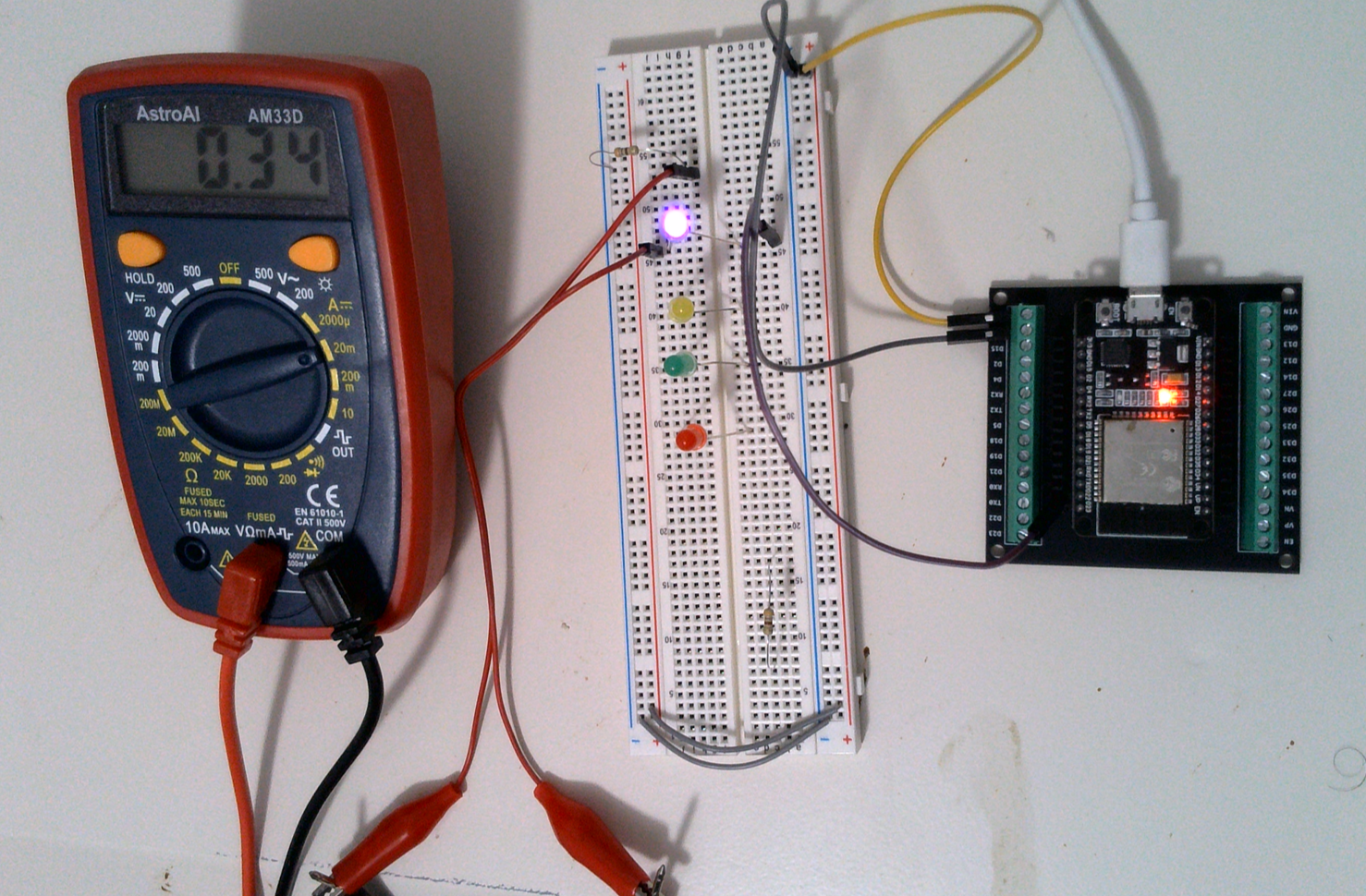
Current measurements during PWM-controlled LED blinking at 30 Hz frequency.
Violet LED Blinking
Yellow LED Blinking
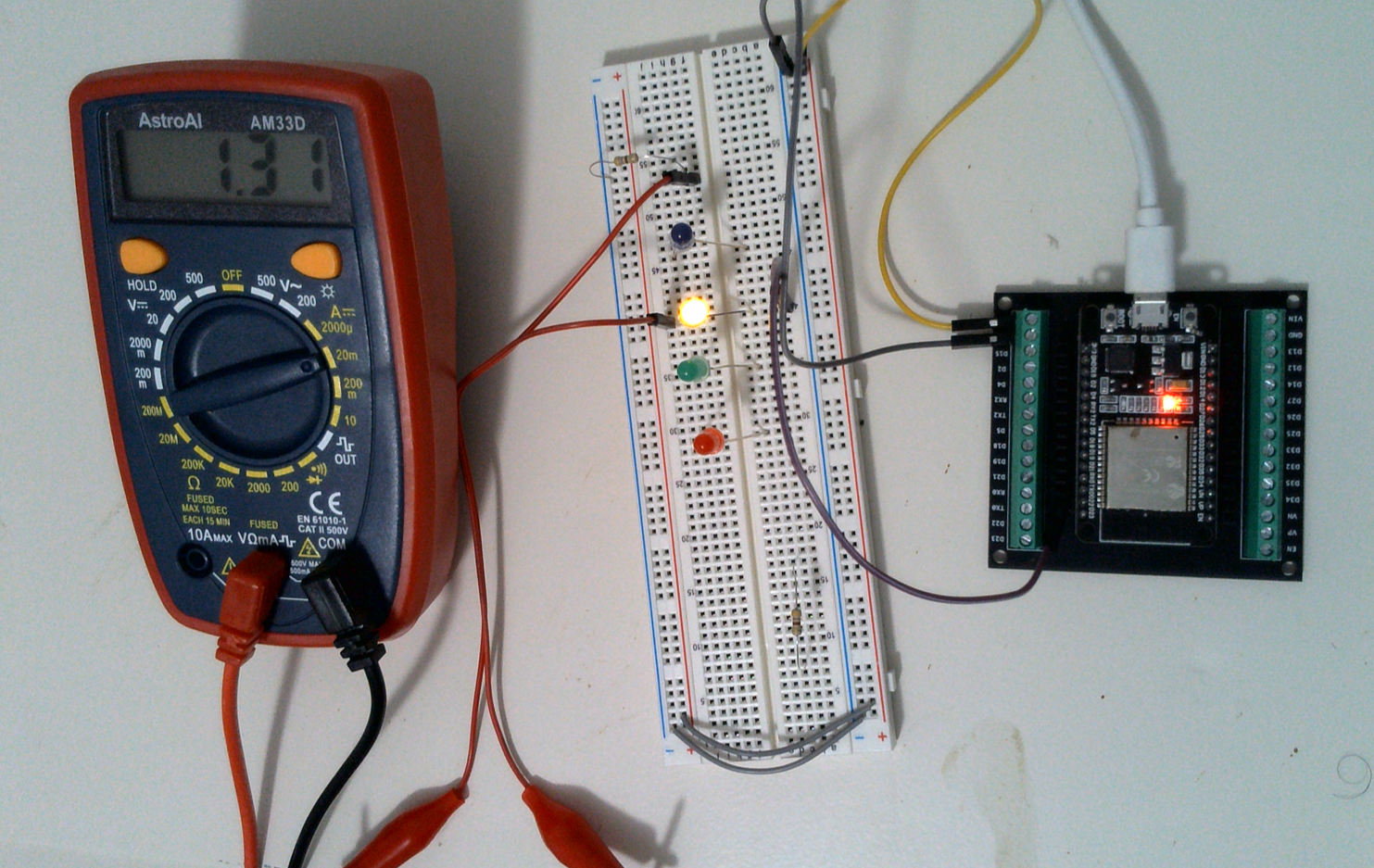
Current: 1.25 - 1.31 mA
Green LED Blinking
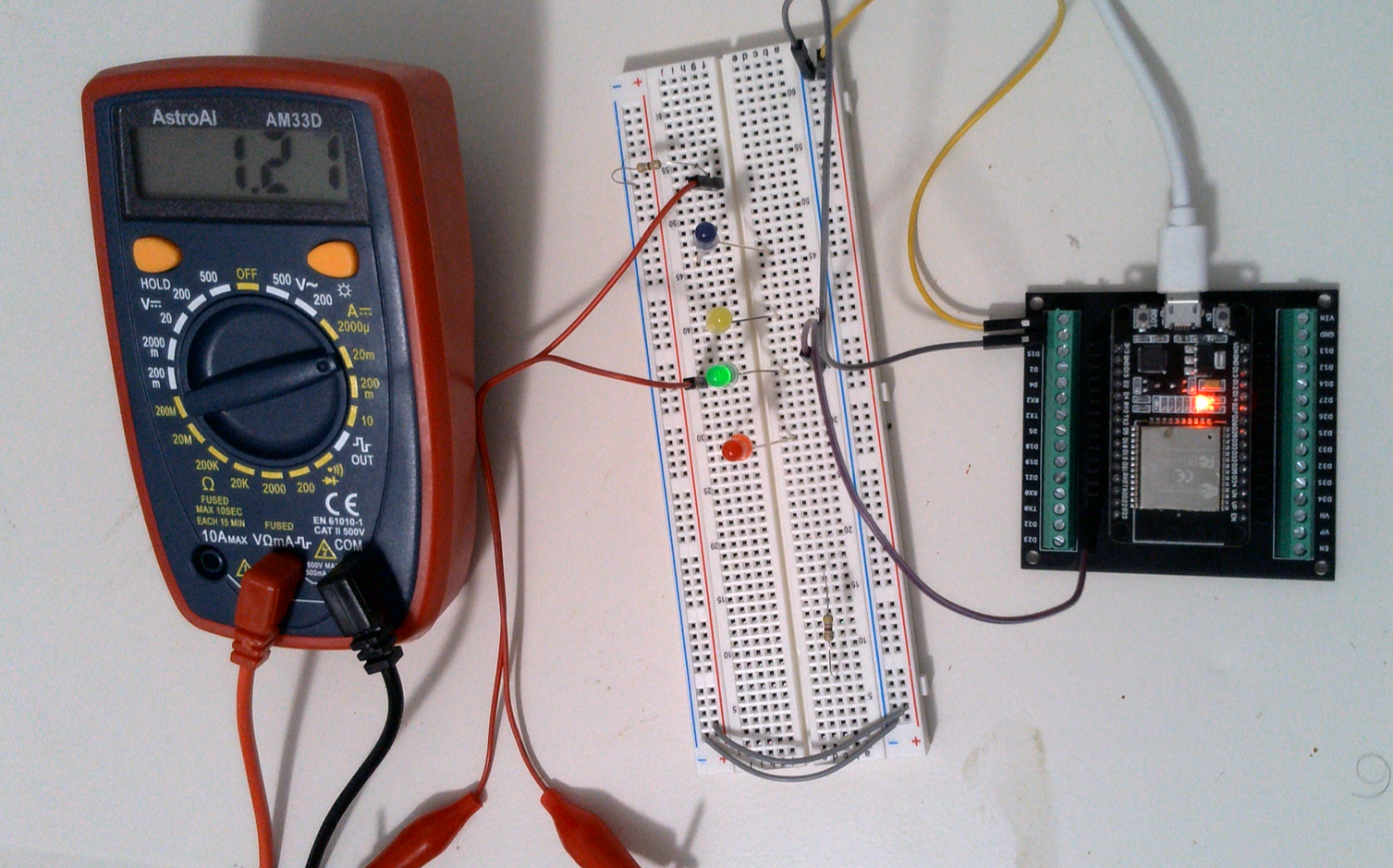
Current: 1.21 - 1.27 mA
Red LED Blinking
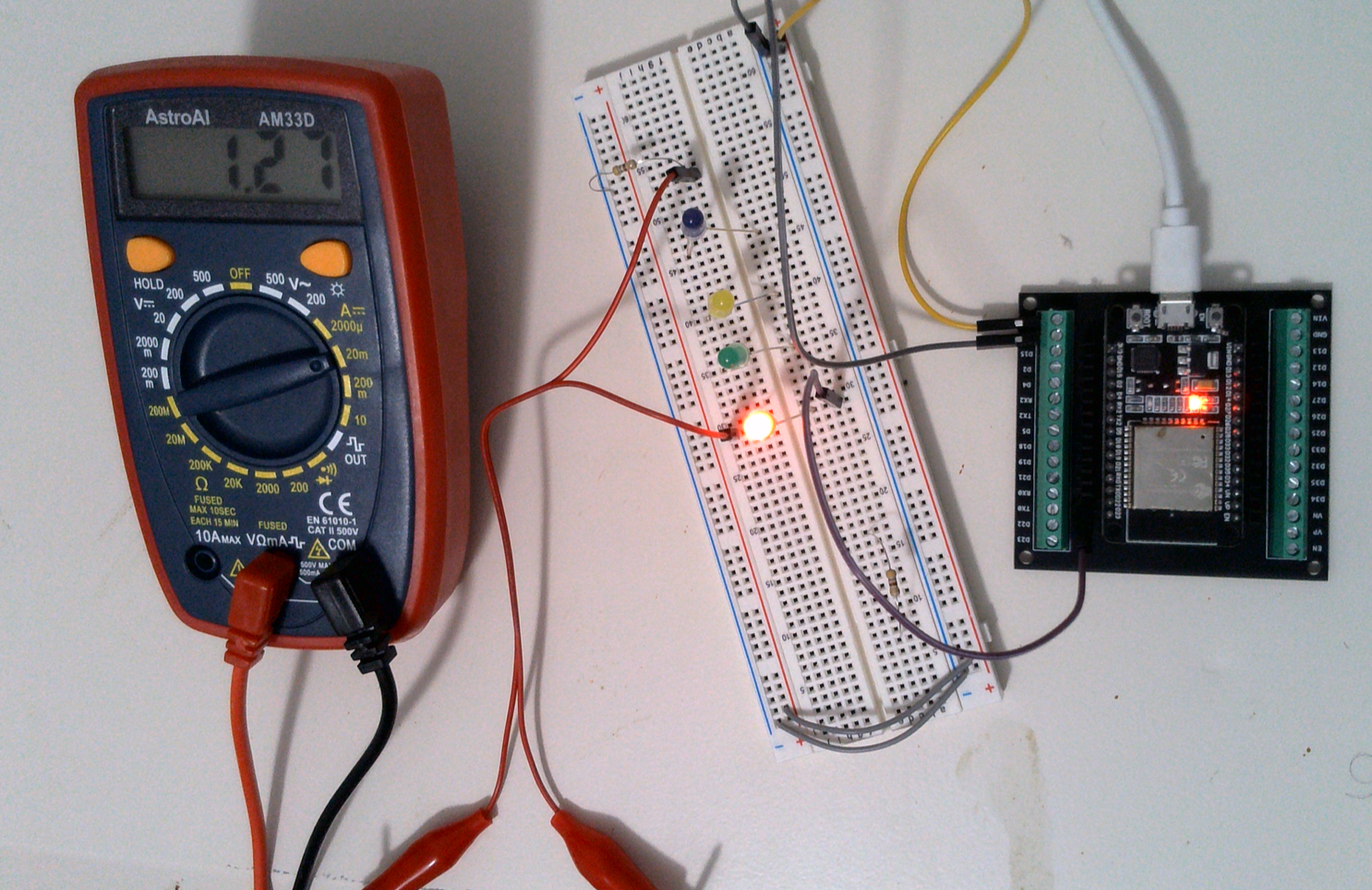
Current: 1.21 - 1.27 mA
PWM control at 30 Hz reduces average current consumption by approximately 50% compared to continuous operation, demonstrating effective power management through duty cycle control.
Key Observations
- LED Color Impact: Different LED colors exhibit varying forward voltage characteristics, with violet LEDs showing the highest Vf (2.98V) and red LEDs the lowest (1.97V)
- Current Efficiency: The 470Ω current-limiting resistor effectively manages LED current within safe operating ranges
- PWM Benefits: Blinking operation at 30 Hz reduces average power consumption while maintaining perceived brightness
- Power Optimization: Strategic use of duty cycle modulation enables significant energy savings in battery-powered applications